Docs on Call
Weight Loss Options: Bariatric Surgery and GLP-1s
10/22/2026 | 27m 24sVideo has Closed Captions
Explore bariatric surgery, GLP-1 medications and long-term weight management.
Mark Welp welcomes OSF HealthCare’s Dr. David Kelly and Dr. Christina Kim to explore bariatric surgery and GLP-1 medications. They discuss surgical options, patient preparation, recovery, insurance considerations and the role of ongoing care. Learn how nutrition, exercise and follow-up support fit into long-term weight management.
Problems playing video? | Closed Captioning Feedback
Problems playing video? | Closed Captioning Feedback
Docs on Call is a local public television program presented by WTVP
Docs on Call
Weight Loss Options: Bariatric Surgery and GLP-1s
10/22/2026 | 27m 24sVideo has Closed Captions
Mark Welp welcomes OSF HealthCare’s Dr. David Kelly and Dr. Christina Kim to explore bariatric surgery and GLP-1 medications. They discuss surgical options, patient preparation, recovery, insurance considerations and the role of ongoing care. Learn how nutrition, exercise and follow-up support fit into long-term weight management.
Problems playing video? | Closed Captioning Feedback
Where to Watch Docs on Call
Docs on Call is available to stream on pbs.org and the PBS app.
Providing Support for PBS.org
Learn Moreabout PBS online sponsorship(upbeat music) (upbeat music continues) - Sometimes diets, exercise, lifestyle changes, and willpower just aren't enough to lose weight.
Tonight, we learn how medications and surgery can help.
(bright music) (bright music continues) Good evening, and thanks for joining us for WTVP's "Docs on Call."
I'm Mark Welp.
More than one-third of Americans are considered obese.
Obesity increases the risk of hypertension, type 2 diabetes, coronary heart disease, stroke, and certain cancers.
Dr.
David Kelly and Dr.
Christina Kim from OSF HealthCare are here to discuss the long-term benefits of surgical weight loss compared to the growing trend of GLP-1 drugs.
Thank you both for coming in.
- Thank you.
- Thank you for having us.
- So, I didn't know that bariatric surgery has been around for a long, long time, and I know it's evolved.
First of all, we should tell people about the types of bariatric surgery.
Christina, why don't you tell us about that?
- Yeah, so there are a handful of operations that we offer at St.
Francis.
So, that includes the sleeve gastrectomy, which is one of the most common operations that are offered in the United States.
We also offer the Roux-en-Y gastric bypass, along with, for certain patient populations, the duodenal switch, and then the endoscopic sleeve as well.
- Okay, before we get into those specifics on those types, how do these differ from a Lap-Band surgery where doctors are putting literally a band around your stomach to prevent a lot of food from going in?
How do these bariatric surgeries that she just mentioned, how are they different?
- So, Lap-Band is one of the things that we were trained to do back in the day, but Lap-Band has basically become obsolete.
It's less than 1% of bariatric surgeons today are doing the Lap-Band, because over years its efficacy has been shown to not really be very good.
So, the sleeve, the bypass, the duodenal switch are the mainstay, because they are the more effective operations today.
- Okay, interesting.
So, let's talk about these individually and let people know how they work.
Doctor, let's talk about the sleeve operation.
Tell us about that.
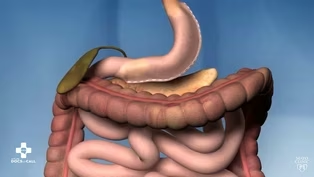
- So, a gastric sleeve, we end up removing about 80% of the stomach.
It's done laparoscopically or robotically, and we use a stapling device to divide the stomach from the specimen that we remove to the specimen that stays.
It essentially turns the stomach from about the size of a football to about the size of a banana.
- Okay, and that sounds very permanent.
- Mm-hmm!
- Okay.
So, with the stomach being smaller, obviously you can't eat as much.
And do you feel full faster, then?
- So, the way that the operation really works, so we do reduce the size of the stomach.
So, there is some restriction that you feel just with reduction in size, but the real way that these operations work is with hormonal changes within the body.
So, removing that 80% of the stomach removes 80% of the cells that produce a hormone called ghrelin.
That is one of the hunger hormones of our body.
So, reducing that ghrelin production reduces the signals to your brain to tell you that you're hungry.
- Interesting, okay.
And let's talk about the gastric bypass.
How does that work?
- So, that one actually turns your stomach into a tiny little pouch and we reroute the intestines.
So, we bring up some intestines to drain that little pouch into your intestines.
That portion of the stomach that has been cut away actually stays inside your body.
So, because it actually does make some important hormones to help, you know, digest your food, we do make another connection further along inside your intestines to absorb the food that you've eaten.
- Now, is that more complicated than the sleeve surgery?
- It is a little bit more complicated than the sleeve.
It does take a little bit more time, but it is a very... It's been a surgery that's been around for over 50 years, so it has a lot of good research and data behind it in terms of its long-term effects.
- [Mark] Is one of those surgeries more effective than the other in your opinion?
- Statistically, they're similar in effectiveness.
Maybe the bypass is slightly more effectiveness for weight loss, and especially more so for diabetes control.
The bypass does work with the same kind of hormones, but you add in a few more hormones, being the GLP-1s that you know about from the drugs, as well as PYY, and there's about 50 other hormones that are involved with that operation, too.
- So, when someone comes in and they're interested in this type of surgery, how do you determine which is best for a certain patient?
- Every patient is different, but there are some main factors that we do take into consideration before we kind of lean towards one way or another.
So, for patients who are chronic smokers or steroid users or they use NSAIDs, so those are medications like ibuprofen, Advil, Aleve, we do lean more towards the sleeve as opposed to the gastric bypass, because there are some complications that can be associated with using those three main factors with a gastric bypass.
For patients who have really bad diabetes, we do lean more towards the gastric bypass, because, as Dr.
Kelly mentioned, there are some significant hormonal changes that can occur that will improve and also cause diabetes remission.
- Okay, and as far as a sleeve-to-bypass conversion, tell us about that.
That almost sounds like a fixer-upper type deal.
- So, usually those are reserved for patients that end up with reflux issues after the sleeve, which is the most common complication after the sleeve.
So, they have lots of reflux issues.
We end up cutting the sleeve basically in half to maybe a third of what it was, and then reroute the intestines as we do with a gastric bypass, which for most patients will resolve the reflux issues.
- Is there any way to determine before the surgery, the initial surgery is done, if someone's going to have reflux problems, or is it just one of those things that you do the surgery and then you discover that there may be an issue?
- Some of it's trial and error figuring that out, but we commonly do a workup beforehand, so including history and physical, figuring out what their symptoms are, figuring out if they have reflux at baseline, as well as we have every patient undergoing an upper endoscopy, so a GI procedure to look down and see if there's any evidence of reflux.
We also have them perform a manometry test to help us decide if there's any motility issues within the esophagus that may lead to more reflux problems in the future, so that they wouldn't tolerate a sleeve as well, in which case we usually move them a little more towards a bypass in that case.
- Okay, if someone is interested in this, whether it's purely cosmetic, they want to look better, or they're having serious health issues already, tell us, walk us through the process, how this works and what people have to do to, I guess, be eligible to have one of these procedures done.
- Yeah, absolutely.
So, we do send people to our weight management center where they take classes to learn for lifestyle modifications for before and after surgery.
We also have a handful of tests, like Dr.
Kelly mentioned, that we perform prior to surgery just to make sure that everything looks appropriate with their anatomy.
Everybody does undergo a psychiatric evaluation just so that we make sure that we're not setting up the patient for failure long-term with these operations.
And, you know, unfortunately, insurance does come into play as well, so we need to make sure that insurance criteria has been met to move forward with weight loss surgery.
- Since you mentioned that, can you give us an idea of how often insurance will pay for it, and if so, how much, and kind of give us a ballpark figure on that?
- I don't know that I can give a ballpark figure in the cost of surgery, unfortunately, but most commercial insurances, including Medicare and, excuse me, Medicaid, do cover weight loss surgery.
Unfortunately, there are some commercial insurances that don't cover it, and that we do actually have our finance office check before we move forward with anything.
- Okay!
So I know there's a great success rate with these things, but you know, if it were easy, obviously everyone would do it.
What do people need to keep in mind when they have the surgery?
And I'm sure you let them know before they have the surgery, but what kind of work do they have to put in after the surgery?
- So, the surgery's a tool.
So, the lifestyle modifications, which they learn with our dietitians and our exercise physiologists, is really the work that they're going to have to do.
And this is a lifestyle change.
So, this is for the rest of their life that they need to make changes to their diet, changes to their exercise patterns for long-term success.
But the surgery does help us move our weight set point, which the body likes to defend from a higher level down to a lower level.
So, we're trying to get their BMIs down below 30 if we can.
- Mm-hmm!
- And then another important factor is that obesity, morbid obesity, is a chronic medical condition.
It should be treated just like high blood pressure, diabetes, any of those medical conditions.
We monitor on an annual, if not more frequent basis, and treat it as depending on how patients respond.
And so that's the same with obesity.
You have to monitor it, you have to address it, and you have to treat it.
- You threw out the word there, success.
Can you determine the definition of success, or does it vary between patients?
- It varies between patients.
I mean, what I try to tell my patients, I don't give them an exact number.
I tell them my goal is for you to be healthy and happy, whatever that means.
If that means trying to get your diabetes better under control, getting you off of medications for high blood pressure, high cholesterol, diabetes, letting you be able to get down on the floor and play with your grandchildren, letting you walk without pain, or be able to get you down to a weight where you can qualify for that joint replacement or that joint surgery that you don't qualify for at that higher weight.
There are different criteria that we have in our societies that judge success rates.
It's so varied from place to place that you read, but I usually tell them healthy and happy is my goal for you.
- Sure, I guess, you know, when we see, we'll talk about GLPs in a minute, but when we see these commercials, they all say you can expect to lose whatever percentage of your current weight.
Can you say anything like that with these gastric surgeries, like minimum you'll lose X amount percentage of your body weight or anything like that?
- So, on average, so, everybody's a little bit different, I will say, but on average you do expect about 25% total body weight loss with a sleeve and about 30% with a Roux-en-Y gastric bypass.
So, that is kind of the average that we would expect to see after these operations.
- When someone comes in, do you ever discourage people from doing the surgery, maybe because they haven't tried other methods yet for weight loss, or you know, you mentioned you do do a psychological test, things like that?
Are there any people that you've said, "Eh, this may not be for you"?
- I would say that it's probably very rare that that actually occurs.
Most people, surgery is a very durable way to lose weight.
And so unless there is an absolute contraindication, we try to get them through to weight loss surgery if we can.
- Things like active eating disorders, uncontrolled psychological disorders, those are things that would be more absolute contraindications, but most patients with behavioral changes can qualify, and as we talked about, it is the most effective way to keep the weight down in the long run.
- Along the same lines, would this surgery be considered a last resort in terms of, you know, if someone's tried diet, tried exercise, tried everything, you know, you don't want to shame people, obviously, but I would think that some people would be encouraged to maybe try some of those traditional things first before just jumping into a surgery?
- I would not consider it a last resort.
In fact, getting to surgery, which is the most effective way for weight loss earlier, you're going to see more benefits in the long run.
So, as soon as the BMI passes 40, the statistical chance that you're going to be able to get down below 30 and keep that weight under 30 is pretty low.
About 95% of patients will fail with weight loss on their own and they need some kind of assistance, whether it be surgery, whether it be medications, whether it be assistance from dietitians or exercise physiologists, but we kind of see it as a pyramid.
The surgery is the most effective way to get the weight down, but we usually look at it as an all-of-the-above type of treatment.
So, we use medications, we use the dietitian, we use the exercise physiologist to help with the weight loss.
- I was watching some videos online about the surgery and it's done laparoscopically, so that's a little less invasive than maybe people might imagine, you know, with another surgery.
Can you kind of take us through how people prepare for the surgery, how long the surgery takes, and what kind of recovery period there is?
- So, on average, the process to get through our weight management classes is 5 to 6 months.
And then, depending on testing, we do put certain patients on a liver reduction diet if they have some fatty liver disease.
They do an all-liquid diet the day before and then they come in and get their surgery.
Like you mentioned, it is minimally invasive, so we either do it laparoscopically or with the assistance of the robot, and most patients stay in the hospital overnight.
We have some criteria that we determine if they're able to go home the next day, but 99% of our patients are able to go home that following day.
And then long-term recovery, I would say probably on average about three to six weeks for patients to get back and doing all of their normal activities.
- Okay.
- Well, They should be up and walking same day as surgery.
We should be moving.
There's a modified diet that they have to follow postoperatively that starts with a liquid diet, then goes to puree, and then soft foods that gradually kind of progress through that first month post-op.
- Sure!
You mentioned earlier the reflux.
- Mm-hmm!
- Are there any other potential side effects for this?
And I guess we've talked about the pros.
Let's talk about the cons, if there are any.
- Mm-hmm, so, the big issue after the sleeve primarily is reflux-related problems.
Dumping syndrome can also occur after the sleeve, but it's more common after a bypass.
And as Dr.
Kim mentioned earlier, use of NSAIDs or nicotine or steroids can cause marginal ulcers to develop in the gastric bypass.
There are some other rare complications that can occur, but overall complication rate after these operations is less than 4% and mortality rate is less than .1%, which is on par with a hip replacement or a gallbladder removal.
- Tell us about, without naming names, tell us about some success stories that you've had.
I'm curious about maybe some really, not only really big weight loss, but improvements in lifestyles that maybe have extended someone's life.
- I mean, we've had some really great success stories in terms of remission of diabetes, where they've been able to come off all of their insulin and diabetic medications when they were on large volumes of insulin.
We've also had people, especially in Dr.
Kelly's case, who wasn't really able to be mobile and now is able to play hockey on an amateur level.
So, we've had some really good successful stories from that standpoint.
- We've also had patients that, one specifically comes to mind that said that she couldn't even walk across the room to go see her grandchildren, play with her grandchildren.
Now she's walking 5Ks, she's down on the floor and playing with them.
The real reason for this is for that lifestyle change, for that improvement in the quality of life.
I've had patients that have been able to come off of oxygen because they no longer have that pressure on their chest so that they can breathe again.
There's so many stories like this, we can go on and on.
- [Mark] Sleep apnea.
- Sleep apnea- - Absolutely.
- We can fix sleep apnea, get you off of the CPAP, make it so you don't hurt as much when you're walking around.
- Sure.
- Yeah.
- How young can someone have this surgery?
Is there a guideline for that?
- So, our center will only operate down to 18.
We aren't a pediatric certified center.
There are adolescent programs out there that I think will operate down to an age 14.
- [Christina] Mm-hmm!
- But our center, we start at age 18.
- I would guess that 14 would be a pretty extreme case.
- Unfortunately, it's becoming more and more common.
- Yeah, let's talk about GLP-1s, the Wegovys and all those things that we're bombarded with commercially these days, and it seems like everybody and their brother are using them.
First of all, what are your opinions on those types of drugs as compared to bariatric surgery?
- So, again, I think bariatric surgery is the more sustainable option, but GLP-1s can be a good adjunct to help with additional weight loss with the bariatric surgery.
Unfortunately, with these medications, patients are not often able to stay on it for long periods of time due to cost and/or side effects.
And so that is, I think, the biggest downside of these medications, is that about 80% or more of people are off that medication at about a year.
- And from what I've heard, once they get off, they could gain all that weight back and then some, potentially- - Yes, that is the unfortunate side effect of stopping these medications.
- Yeah, when people come in to consult about weight loss and weight loss surgery, do they bring up the GLPs and say, "Hey, I can just take a shot once a week.
Why should I have the surgery done?"
- Yeah, it happens fairly frequently.
So, as Dr.
Kim was saying, we use it as an adjunct.
So, we use it for both pre-surgery for some patients with heavier weights, as well as post-surgery for patients that weren't quite losing where they want to or where we want to, or they had some weight regain afterwards.
These medications are a great adjunct for what we do, but patients have to be on them for the rest of their lives, otherwise they lose the effects of it.
So, I've had a number of patients that come in and say, "I'll just use the medication for a year, get the weight down, and then come off of it."
Well, we've seen statistically that patients will regain 2/3 to 100% of the weight that they lost within a year to a year and a half after they come off the medications.
- Earlier, when we talked about the Lap-Band, you know, you said that long-term, it's not as effective as the bariatric surgery.
- [David] Mm-hmm!
- With the bariatric surgery, is there any kind of, quote-unquote, "tune-up" that you need after a certain amount of time, or is it, you know, you have the surgery and it heals up and you're good to go the rest of your life?
- No scheduled tune-ups.
It's important to continue following up with your bariatric surgeon in the long run so that we can help make sure that you maintain that weight loss that you want and that we want for you.
But there's no surgical tune-ups unless you have some kind of weight regain issue or some other problem, in which case we usually start adding in medications and working with the dietitian to work with diet and behavioral changes first.
- So, it's important to make sure you're following up, even if you are having what you might consider success, it's important to follow up with your doctor about that?
- Yes, absolutely.
- Mm-hmm!
- What are some of the things that people may struggle with even after having the surgery in terms of, you know, you have to change what you eat sometimes and how much of it that you eat?
What do people have issues with a lot?
- So, you know, you get stressors in life and that can turn you back to some poorer habits that you have had.
So, those stressors can cause weight gain themselves, but the dietary habits that can come with it can also add to it as well.
What else?
- Are there certain things that you probably should avoid eating once you've had the surgery?
- So, especially for gastric bypass patients, higher sugar intake or fat intake or some liquid carbohydrate intake can cause dumping syndrome to develop, which can be quite uncomfortable.
- So, when you say dumping syndrome, can you expand on that a little bit?
- So, dumping syndrome is where when you have too high of a carbohydrate load within the intestines, your body shifts water from the vessels into the intestine, which can make you feel like you don't have enough blood volume, so you can feel lightheaded, you can feel dizzy, you can get diaphoretic, you can feel weak, and then about an hour or two later, you can have some diarrhea issues that can develop, as well as bloating problems as well.
- Does alcohol have any negative effects if you know, drinking too much with this, or?
- So, you can become more sensitive to alcohol.
I joke with my patients that you'll become lightweight after the operation.
- Yeah.
- So, you absorb the alcohol faster, it goes through a slightly different process than it would with a normal anatomy, and you become more affected by alcohol easily.
Also, some patients will have a transference addiction, so they have the addiction to food, though that transference addiction can sometimes be to alcohol.
So, unfortunately, there is a higher incidence of alcoholism in post-bariatric patients for that reason.
- When people have the surgery and they're getting used to their new lifestyle, do you run into people that say, "Hey, you know, I feel kind of weird.
I'm at family events.
Everybody else is eating a lot.
I'm not eating much?"
Is there any kind of a stigma that people worry about with having the surgery and having those effects?
- Unfortunately, yes.
Sometimes, you know, family members who, you know, come around food, they do get that additional stressor of not being able to eat as much.
Sometimes that can happen at restaurants as well when you're ordering from the children's menu as opposed to the adult menu.
So, there can be those additional stressors, but we walk through with the patient how to kind of work around those stressors.
- Sure.
Well, as we wrap this up, is there anything we haven't talked about that you think is important for folks to know about bariatric surgery?
- Qualifying criteria.
So, historically from the 1991 NIH consensus, the qualifying criteria was a BMI of 35 with high blood pressure, high cholesterol, diabetes, or sleep apnea, or a BMI of 40 or more without any qualifying medical conditions.
Our society in the past few years has changed those qualifying conditions from down five for both of those.
So, a BMI of 35 without medical conditions or a BMI of 30 with those medical conditions.
Unfortunately, insurance has really stuck to the 1991 consensus conference and hasn't really switched to the more modern criteria.
- And again, if someone is interested in this, what's the first step?
Should they go to their family physician first and talk with them about it?
Can they come straight to your department?
How does that work?
- We actually don't require a referral to our office anymore.
So, if you are interested in talking about the options, then you just have to call our clinic and schedule an appointment with one of us and we'll be able to see you.
- But we can also take referrals from primary cares or any medical provider as well.
- And again, you mentioned, you know, different things you need to do to prepare.
So, we're talking about if today someone decides to get the surgery, it's going to be at least six months before that's... - I would say probably on average, we take about 6 to 12 months to get through all the testing and classes from seeing us for the first time to the actual surgery.
- Yeah, for most patients, it took their entire lifetime to get to the current behaviors that they have, so it takes a little while to unlearn some of those behaviors and change to a new behavior.
- Well, it's probably good, too, because some people may make a snap decision, but given that time, they can definitely think about it.
- Mm-hmm!
- Dr.
David Kelly and Dr.
Christina Kim with OSF HealthCare, we appreciate all of your info.
Thanks for joining us today.
- Thanks for having me.
- Thanks for having us.
- All right, and you can watch this show again and share it.
Just go to wtvp.org, and you can find out about future show topics on our Facebook and Instagram pages.
And as always, we want to know your questions and topic suggestions.
You can message me on social media or leave a comment.
Thanks for watching, and take care of yourself and your family.
(bright music) (upbeat music)
 New
Preparing for Weight Loss Surgery
Video has Closed Captions
Learn about the evaluations, classes and insurance checks before weight loss surgery. (1m 1s)
 New
Video has Closed Captions
Why nutrition, exercise and ongoing care matter after weight loss surgery. (1m 19s)
Providing Support for PBS.org
Learn Moreabout PBS online sponsorship New Episode
- Science and Nature

Explore scientific discoveries on television's most acclaimed science documentary series.
 New Episode
- Science and Nature

Capturing the splendor of the natural world, from the African plains to the Antarctic ice.


 New Episode









Support for PBS provided by:
Docs on Call is a local public television program presented by WTVP